The IUGS Initiative
on Forensic Geology
The International Union of Geological Sciences (IUGS) Initiative on Forensic Geology (IFG) was established
at UNESCO headquarters in Paris, France on 22 February 2011. The aim of the IUGS-IFG is,
‘to develop forensic geology internationally and promote its applications’.

What is Forensic Geology?
T.R.A.C.I.N.G. PALAEONTOLOGY 2027
The IUGS Initiative on Forensic Geology is pleased to announce T.R.A.C.I.N.G. Palaeontology 2027 — an international, multidisciplinary initiative convened to develop practical, voluntary tools for documenting, tracing and safeguarding palaeontological material.
Promoted by IFG and hosted by Alma Mater Studiorum – University of Bologna in April 2027, the project brings together expertise from eight complementary perspectives: Academia; Museums & Heritage; Law Enforcement & Customs; the Commercial Sector and International Trading; Industry & Compliance; Legal & Judiciary; Geo‑Forensic Specialists; and Science Communicators.
T.R.A.C.I.N.G. Palaeontology 2027 responds to a clear global need: demand for fossil material has increased while documentation practices, forensic capacity and cross‑border procedures remain fragmented. Similarly, here is no universally accepted definition of “fossil” or consensus on when material should be treated as cultural heritage. This gap creates uncertainty for museums, researchers, traders, enforcement agencies and source communities. The initiative provides a practical, neutral forum where experts can compare working practices, identify shared technical questions and agree a common factual basis to inform pilotable solutions.
IFG will provide neutral technical stewardship to ensure scientific rigour and international relevance, while the University of Bologna’s hosting underscores the academic and institutional basis for the project and offers a central venue to convene working groups and formalise deliverables.
This is an initial announcement of the T.R.A.C.I.N.G. Palaeontology 2027 meeting. Further details – including a provisional programme, working‑group themes, participation guidance and briefing materials – will be circulated in the coming months.
We are establishing an Organising Committee of IFG expert representatives that will liaise with stakeholder communities and broaden participation to ensure the initiative reaches and serves a wide range of relevant actors. We welcome dialogue with interested organisations and experts.
On behalf of the IFG organizing committee and University of Bologna
Federico Fanti, Giorgia Bacchia, Rosa Maria di Maggio, Laurance Donnelly
Save the Day! T.R.A.C.I.N.G. Palaeontology – Bologna, April 2027
Transnational Research, Analysis, and Commerce: Implementing New Guidelines.
Harmonizing Global Standards for Heritage Security, Science, and Trade

T.R.A.C.I.N.G. PALAEONTOLOGY 2027 represents a landmark initiative designed to harmonise and operationalise global protocols for the investigation, protection, and regulation of palaeontological heritage.
Historically, the absence of shared initiatives and the complexity of opaque bureaucracy have fostered an isolationist environment. In this context, stakeholders have been compelled to operate under subjective interpretations rather than shared standards, leaving the international community effectively deprived of a unified operating language. T.R.A.C.I.N.G. PALAEONTOLOGY aims to bridge these regulatory and methodological gaps by moving beyond historical polarization and establishing a cohesive, technically grounded framework that serves science, justice and legitimate trade.
The delegates convened for T.R.A.C.I.N.G. PALAEONTOLOGY possess profound, specialised expertise within their respective domains. Yet, whether legal, scientific, or commercial, this knowledge converges on a single subject: the fossil itself. We proceed from the conviction that this expertise, currently siloed, must be shared. Integrating these distinct perspectives is the only path to a holistic understanding of heritage security, yielding a collective benefit that no single sector can achieve in isolation.
The urgency for this dialogue has never been more acute, driven by a critical operational inefficiency in the global management of palaeontological heritage. Whilst the market for palaeontological specimens has evolved from a niche curiosity into a high-value international industry, the accompanying regulatory landscape has remained dangerously underdeveloped.
At present, legitimate stakeholders—whether in law enforcement, science, or the commercial sector—are constrained to act a posteriori. Interventions typically occur only after a legal boundary has been crossed, a transaction has been flagged, or a reputational crisis has already emerged. This reactive posture is legally hazardous and economically inefficient, leaving responsible actors to manage disputes that could have been avoided.
Currently, prosecutors, border agents, and compliance officers lack the standardised forensic toolkit necessary to distinguish between a legally traded specimen and the proceeds of heritage crime. This regulatory vacuum creates immense legal risk for private collectors and auction houses, imposes significant operational delays upon the construction and mining industries, and poses a persistent threat to scientific research.
T.R.A.C.I.N.G. PALAEONTOLOGY 2027 aims to invert this paradigm. By integrating the specialised expertise of our delegates, we seek to transition from a system of reactive litigation to one of proactive regulation. Shared intelligence allows us to anticipate compliance risks and standardise procedures before they escalate into conflicts. Establishing these preventive protocols is essential to providing the legal certainty and operational stability required by the international market and the scientific community alike.
While the increasing number of seizures, investigations and enforcement actions has highlighted the urgency of addressing illicit trafficking of palaeontological materials, it has also exposed a critical systemic weakness: the absence of clear, shared and operational criteria capable of distinguishing illicit conduct from legitimate commercial activity. In many cases, lawful operators acting in good faith are placed in conditions of legal uncertainty, facing delays, confiscations and reputational risks not because of wrongdoing, but due to fragmented regulations, inconsistent interpretations and the lack of standardized documentation frameworks.
This initiative is therefore not conceived solely as a response to heritage crime, but as a proactive effort to protect legitimate trade by providing clarity, predictability and procedural certainty to all actors involved. By developing shared standards on provenance documentation, traceability and chain of custody, the project aims to reduce arbitrary enforcement outcomes, support compliance-oriented businesses, and allow enforcement authorities to focus their resources on genuinely illicit practices. Protecting palaeontological heritage and enabling legitimate commerce are complementary objectives that together support a credible, sustainable regulatory ecosystem.
To achieve a comprehensive and executable framework, T.R.A.C.I.N.G. PALAEONTOLOGY 2027 convenes eight distinct professional groups, each bringing essential, specialised insight to the table.
Academia and Museums & Heritage institutions provide the necessary scientific foundation. Their primary contribution is to contribute expertise in assessing scientific relevance, while fully recognizing that scientific publication and commercial circulation operate under distinct, complementary and non-hierarchical frameworks. This is reinforced by Geo-Forensic Specialists, who contribute the technical methodologies—such as soil analysis and chemical profiling—required to validate provenance and link specimens to specific geological contexts with evidentiary precision.
Law Enforcement & Customs agencies contribute critical intelligence on global trade routes, illicit trafficking, and field operations. Their perspective is integrated with that of the Legal & Judiciary sector, including prosecutors and private defence counsel, who ensure that any proposed standards are legally robust, upholding both state regulations and private property rights.
Crucially, the Commercial Sector and International Trading and Industry & Compliance representatives contribute the indispensable perspective of the market and land management. Their involvement ensures that regulations are grounded in the operational realities of global trade and large-scale excavation, moving beyond theory to practical application. Finally, Science Communicators serve to translate these technical protocols into public awareness, addressing reputational management and fostering societal understanding.
Bringing these perspectives together creates a pragmatic, multidisciplinary platform for operational standards.
The conference is conceived not merely as a forum for discussion, but as a structured working platform aimed at delivering concrete and usable outcomes. We aim to move decisively beyond the traditional output of a ‘book of abstracts and ideas.’ We acknowledge that significant changes to national and international legislation are complex, long-term processes that require careful deliberation.
Therefore, T.R.A.C.I.N.G. PALAEONTOLOGY 2027 is designed to create an immediate ‘Soft Law’ framework: a robust set of operational rules and technical standards that can be immediately recognised and applied by the stakeholders convened. To achieve these outcomes, the conference will establish dedicated working groups during the event, each focused on the development of a specific deliverable. By establishing a consensus on best practices today, we create a functional tool that resolves current operational challenges, serving as a practical foundation upon which future legislative developments can be built.
T.R.A.C.I.N.G. PALAEONTOLOGY is planned for April 2027 in Bologna, Italy.
Federico Fanti,
Dipartimento di Scienze Biologiche, Geologiche e Ambientali
Collezione di Geologia ‘Museo Capellini’, Università di Bologna, Italy
IUGS-IFG Paleontology Advisor
Giorgia Bacchia
ZOIC s.r.l. Trieste, Italy
IUGS-IFG Geoforensic International Network
Rosa Maria Di Maggio
Geoscienze Forensi Italia
IUGS-IFG Officer for Europe
Laurence Donnelly
Chair, IUGS Initiative on Forensic Geology
AHK International
Q: What is T.R.A.C.I.N.G. Palaeontology 2027?
A: T.R.A.C.I.N.G. Palaeontology 2027 is an international, multidisciplinary initiative to co‑develop voluntary, operational tools — such as standard provenance templates, geo‑forensic methods and traceability protocols — aimed at improving documentation, legal clarity and the protection of palaeontological heritage.
Q: Why is this needed now?
A: Demand for fossils and international market activity have grown, while documentation practices, forensic capacity and cross‑border procedures remain inconsistent. This mismatch generates legal uncertainty and operational delays. T.R.A.C.I.N.G. aims to reduce these problems by developing shared, practical tools that improve traceability, support lawful activity and enable more effective enforcement.
Q: Is TRACING attempting to change national laws?
A: No. T.R.A.C.I.N.G. will develop non‑binding, practical standards and pilot protocols for voluntary adoption. These tools are intended to inform policymakers and support best practice, not to impose legislation.
Q: Who is involved?
A: T.R.A.C.I.N.G. brings together a balanced mix of stakeholders: Academia; Museums & Heritage; Geo‑Forensic Specialists; Law Enforcement & Customs; Legal & Judiciary; Commercial Sector and International Trading; Industry & Compliance; and Science Communicators. The project is hosted by the University of Bologna and technically stewarded by IFG, which will act as a neutral coordinator and adviser.
Q: Where and when is the meeting?
A: The meeting will be held in Bologna, Italy, in April 2027. The University of Bologna will host the event and provide institutional support.
Q: What outputs will TRACING deliver?
A: Standardised provenance fields, chain‑of‑custody templates, geoforensic sampling/reporting protocols, customs guidance notes, training modules and pilot project plans to test tools in selected source regions.
Q: How will pilots be run and evaluated?
A: Working groups will design small, testable pilots in selected source regions with clear objectives, measurable indicators and local stakeholder engagement. Pilot results will be evaluated against agreed metrics, used to refine the tools, and inform wider guidance and adoption.
Q: How does TRACING ensure neutrality and inclusion?
A: By convening balanced representation from all eight stakeholder groups, developing deliverables as voluntary, practical tools rather than legal prescriptions, and maintaining transparent processes with peer review and opportunities for broad input.
Q: Will sensitive case details be published?
A: No. Case material that could compromise investigations or legal processes will be treated as confidential. Public outputs will focus on methods, anonymised examples and non‑sensitive lessons learned.
Q: How can organisations get involved?
A: Organisations can participate by nominating representatives to our working groups, indicating preferred thematic areas (provenance, customs, geo‑forensics, legal, digital traceability, communications), and joining pre‑meeting scoping calls. Please see the briefing pack for contact details and next steps.
Q: Who will be responsible for follow‑up?
A: Working groups established at the Bologna meeting will take ownership of specific deliverables. A central coordination secretariat will manage timelines, collate documentation, and oversee dissemination and evaluation of pilot results
Q: How will success be measured?
A: Short‑term indicators include uptake of templates and protocols in pilot sites, clearer customs and administrative procedures, and positive stakeholder feedback. Longer‑term measures include fewer provenance disputes, faster lawful transfers, and broader adoption of tested tools and practices.

41st International Conference on
Environmental Geochemistry and Health
SEGH2026
The SEGH 2026 will be held from 13–17 July 2026 in Ljubljana, Slovenia.
Conference themes will focus on:
1. inorganic and organic contaminants in the geosphere,
2. environmental geochemistry and human health in the context of extreme weather events,
3. impacts of living environment on human health,
4. emerging technologies and latest challenges in environmental geochemistry, biogeochemistry, medical geology, and toxicology,
5. forensic geology – environmental crimes and the application of geochemical methods in criminal investigations,
6. environmental geochemistry and health (general topic).
Three interesting workshops are planned for the first day of the conference, and a field trip will take place on the last day. More information is available on the conference website here.
The conference is organized by the Geological Survey of Slovenia (GeoZS), the Faculty of Natural Sciences and Engineering, Department of Geology (NTF), Slovenian Geological Society (SGD), and Society for Environmental Geochemistry and Health (SEGH). The conference will be held at NTF (Aškerčeva cesta 12, Ljubljana).
The abstract submission deadline for 41st International Conference on Environmental Geochemistry and Health (SEGH 2026) is extended until 10 April 2026.
IUGS-IFG at the 37th International Geological Congress!
🇰🇷 Busan, South Korea
T28 – Forensic Geology and Medical Geology
Forensic Geology and Medical Geology are specialized branches of geology with different applications. Forensic Geology involves the analysis of geological materials, such as soils, minerals, and rocks, in criminal investigations. It helps identify the origin and transfer of geologic evidence, and assists in crime scene reconstruction and forensic analysis. Medical Geology, on the other hand, focuses on the relationship between geologic materials and human health. It examines the impact of geologic factors, such as exposure to toxic elements in soil or water, on human well-being and the incidence of disease. Both fields combine geological expertise with other scientific disciplines to provide valuable insights into legal investigations and public health concerns related to the Earth’s materials.
Session 1 – Forensic Geology: Illegal Mining and Associated Crimes in the Global Minerals and Metals Supply Chain.
Convener: Laurance Donnelly (IUGS Initiative on Forensic Geology)
Co-Convener: Duncan Pirrie (University of South Wales)
The principal objective of this workshop on, ‘Forensic Geology: Illegal Mining and Associated Crimes in the Global Minerals and Metals Supply Chain is to bring together geologists, forensic geologists, mining and exploration geologists, forensic scientists, law enforcement, related co-professionals and government organisations to evaluate the extent of crimes in the mining, minerals and metals industries. Additionally, the workshop will consider geological methodologies that may aid law enforcement and commercial organisations and customs to deter, detect, prevent, investigate, manage and mitigate the associated risks. Civilisation could not exist as we know it without the minerals upon which it relies. However, whilst parts of the international mining, minerals and metals industries may be lucrative, this also attracts significant criminal activities. Illegal mining and associated crimes appears to be reported as a growing problem around the world. These crimes in illegal and illicit mining and minerals activities may also be associated with human rights violation and money laundering. Crimes that take place in illegal mining can be highly exploitative of local communities, with poor safety in mines, a lack of environmental responsibility resulting in the contamination of land and water, poor resource recovery and the potential sterilisation of future mineral resources. There is likely to remain an increasing demand for strategic mineral commodities. There may also be increasing societal transparency required in terms of the supply chain of minerals and a requirement to ensure their legitimate geographical provenance for usage in everyday items and technology, including cars, phones, laptops and batteries as we transition to a low carbon economy. Papers are invited for presentation in South Korea on; (a) illegal mining beyond regulatory control, (b) criminal activity associated with the mining, processing, shipment and trade of geological raw materials and products, (c) provenancing, tracking and tracing of geological commodities and (d) the social and environmental impacts of illegal mining.
Latest



Events
Would you like to attach a lecture, course or conference to this calendar?
Create an event on Google Calendar and invite geoforenses@gmail.com.
October 2026 |
||||||
| Sun | Mon | Tue | Wed | Thu | Fri | Sat |
|---|---|---|---|---|---|---|
|
1
|
2
|
3
|
||||
|
4
|
5
|
6
|
7
|
8
|
9
|
10
|
|
11
|
12
|
13
|
14
|
15
|
16
|
17
|
|
18
|
19
|
20
|
21
|
22
|
23
|
24
|
|
25
|
26
|
27
|
28
|
29
|
30
|
31
|
There are no upcoming events.
Research Fields

Soil Forensics
Analysis and correlation between traces of soil collected at crime scenes.
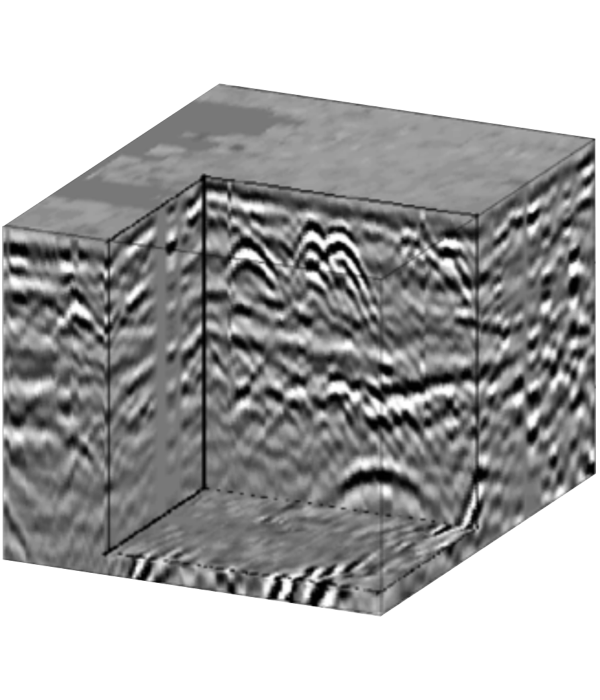
Forensic Geophysics
Subsurface investigation in search of targets of forensic interest.

Forensic Isotopes
Determination of the geographical origin of plants and living beings.

Gems, Precious Metals and Jewellery
Identification and characterization of illegally traded gemstones.
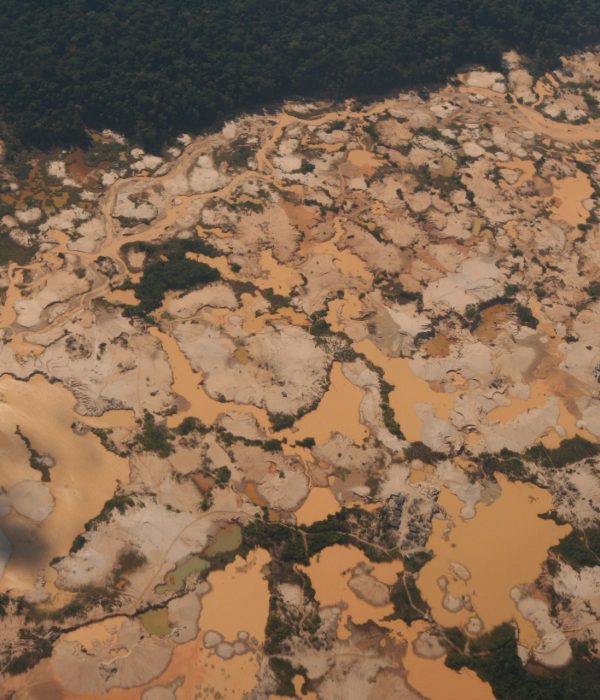
Illegal Mining
Investigation of environmental crimes and illegal mineral extraction.
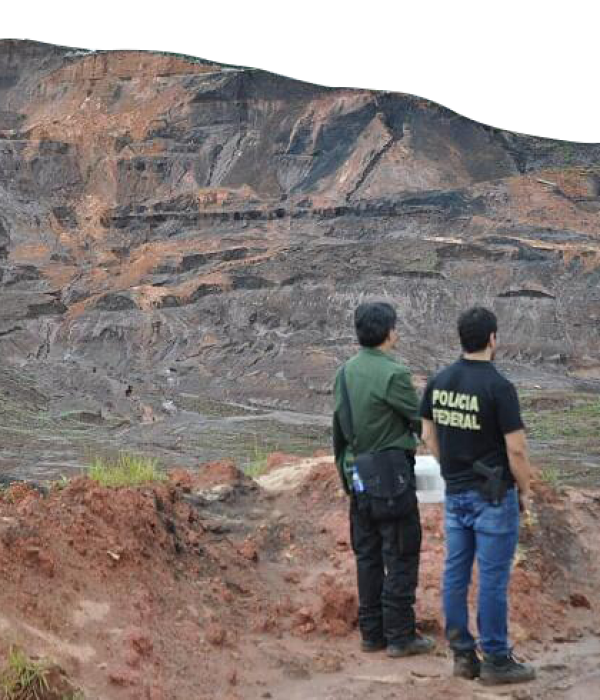
Forensic Geotechnical Engineering
Geotechnical evaluation of dams and mass movements under judicial investigation.

Forensic Paleontology
Characterization and tracking of paleontological pieces trafficked in Brazil.
Forensic Palynology
Study of the application of botanical and palynological traces in the resolution of crimes.


Geoforensics & Society
Advances, paradigms and impacts of Forensic Geosciences in Society.
- South America
- Asia
Student
Chapters
IUGS-IFG Student Chapters are present in 4 countries:
- Brazil (14)
- Argentine (1)
- Chile (1)
- India (1)

#IFGStudentChapter
Partners